
Explore Products for Solder Thermal Interface Material
Have a question? Let us help you.
We are here to help you. Please feel free to contact us with questions, comments or feedback.
Efficient heat management with our Solder Thermal Interface Materials (TIMs), delivering high performance thermal conductivity and bonding for advanced semiconductors.
Our Solder Thermal Interface Materials (TIMs) deliver high thermal conductivity and robust bonding, ensuring efficient heat management in semiconductor applications. Designed for advanced interconnects, they enhance performance and device longevity. High thermal conductivity, low resistance, and reliable heat transfer for advanced semiconductor cooling.
We are here to help you. Please feel free to contact us with questions, comments or feedback.
Advanced solder solutions for interconnecting semiconductor packages, from laminate to leadframe packaging.
Learn MoreOur Semiconductor fluxes for CSP, flip chip, and BGA ball attach deliver high yields, stable performance, and easy DI water cleanup.
Learn MoreIntegrated Solutions
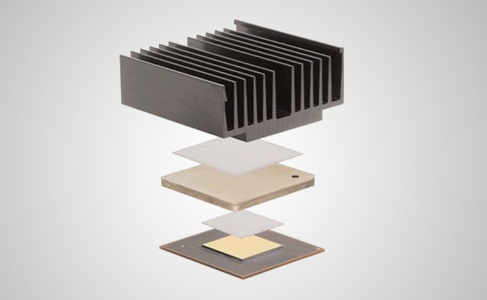
Solder thermal interface materials (sTIM) for semiconductor packaging improve heat transfer between the die and heat spreader in AI, data center, and power electronics applications. These integrated sTIM solutions enhance thermal conductivity and thermal management in advanced interconnects, helping improve device longevity, reliability, and efficiency in next-generation semiconductor packaging.
Sustainability
RoHS-compliant solder thermal interface materials (sTIM) can help support efficient thermal management and compliance-focused semiconductor packaging processes. These advanced sTIM solutions also support sustainability goals by enabling high-performance heat transfer, improving device longevity, and reducing environmental impact in energy-efficient, low-emission semiconductor manufacturing aligned with ESG-driven supply chain objectives.
Reliability
Our solder thermal interface materials (sTIM) reduce thermal resistance and support consistent heat transfer, package integrity, and long-term reliability in high-power semiconductor devices. Engineered for mission-critical AI, data center, and power electronics applications, these solutions deliver stable thermal performance, strong interconnect integrity, and improved durability under demanding thermal cycling and high-power operating conditions.

A solder thermal interface material (sTIM) is used to transfer heat between a semiconductor die and a heat spreader or heat sink by creating a low-resistance thermal path. It reduces thermal resistance and improves cooling efficiency, supporting better thermal management, higher performance, improved reliability, and longer device lifespan in AI, data center, and power electronics applications by mitigating overheating and thermal stress.
Yes, lead-free solder thermal interface material (sTIM) options are available, and many formulations are designed to meet RoHS requirements for global electronics manufacturing. These lead-free materials support high thermal conductivity, reliable heat transfer, and strong interconnect performance in AI, data center, and power electronics applications. Product-level specifications should be reviewed for the specific thermal interface material selected.
Solder thermal interface material (sTIM) is commonly applied by stencil printing or other controlled deposition methods to achieve uniform coverage and consistent bondline thickness. Using precision stencil printing ensures controlled deposition, high-yield assembly, and reliable thermal interface performance, improving heat transfer and consistency in advanced packaging for AI, data center, and power electronics applications.
Yes, many solder thermal interface materials (sTIMs) are designed to meet Restriction of Hazardous Substances (RoHS) requirements, supporting environmentally responsible semiconductor packaging and global electronics manufacturing compliance. These RoHS-compliant formulations eliminate hazardous substances such as lead while delivering high thermal conductivity, reliable heat transfer, and consistent interconnect performance in AI, data center, and power electronics applications. Product-level compliance should be confirmed for the specific formulation and application.
Solder thermal interface materials (sTIMs) are used in semiconductor manufacturing, AI infrastructure, data centers, and power electronics, where efficient heat dissipation is critical for high-performance systems. These materials support thermal management in power-dense devices such as GPUs, processors, and high-power modules, improving reliability, device performance, and thermal stability in cloud, automotive, and industrial applications.