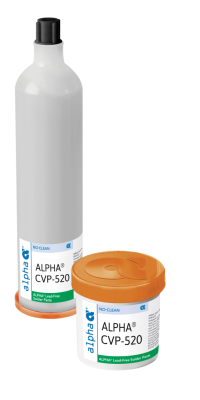
ALPHA® CVP-520 Solder Paste
Enables low temperature Surface Mount Technology (SMT) assembly technology to minimize rework in multiple reflow applications.
Contact UsProduct Overview
ALPHA CVP-520 is designed for near-eutectic low-temperature alloys such as SnBi0.4Ag, enabling peak reflow profiles between 155°C and 190°C. The flux residue is clear, colorless, and provides excellent electrochemical reliability.
The carefully selected alloy in ALPHA CVP-520 offers the lowest melting point and the narrowest pasty range during melting and re-solidification, maximizing resistance to thermal-cycle-based fatigue in traditional low-temperature alloy applications. The alloy also yields very low voiding in Ball Grid Array (BGA) solder joints, even when a traditional Tin-Silver-Copper (SAC) alloy sphere is used.
All components used with SnBi solders must be lead-free to eliminate the formation of tin/lead/bismuth intermetallics, which have a melting point under 100°C.
Product Features

Eliminates the Need for a Second or Third Reflow Cycle
Eliminates the need for a second or third reflow cycle when temperature-sensitive components are used.
Reduce Energy Consumption in Reflow Ovens for Greater Efficiency
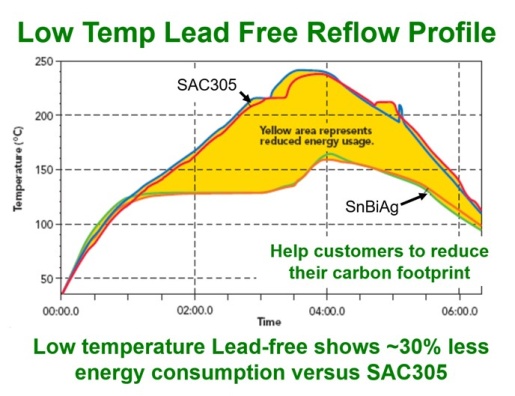
Low-temperature alloys reduce energy consumption in reflow ovens compared to standard lead-free alloys.
8-Hour Stencil Life
Lower Reflow Profiles Enable the Use of Low Tg Substrates
Compatible with Both Nitrogen and Air Reflow
Low Melting Point Offers Significant Process Advantages
Low-temperature lead-free solder paste (i.e., <200°C peak reflow temperature) offers three significant process advantages:
- Elimination of a wave or selective soldering process step in multiple reflow applications
- Prevention of damage to temperature-sensitive components and connectors
- Reduced reflow cycle time and energy consumption
The reduction in reflow cycle time and energy consumption can also translate into a reduced carbon footprint.
Meets the Latest Assembly Process Requirements
Low-temperature solder pastes engineered to meet the latest assembly process requirements dictated by new component designs.