
Maximizing High-Density Interconnect (HDI) Circuit Board Reliability with Advanced Metallization
Read this article by Carmichael Gugliotti on Maximizing High-Density Interconnect (HDI) Circuit Board Reliability with Advanced Metallization.
 Carmichael Gugliotti
Product Manager - Primary Metallization - MacDermid Alpha Electronics Solutions

The demand for smaller, more powerful and reliable circuit boards is higher than ever, especially in advanced consumer electronics, automotive, and medical applications. As HDI adoption grows in these applications, PCB fabricators face the challenge of ensuring reliability in these dense and complex designs.
At the core of HDI performance lies primary metallization, the key to robust electrical connectivity and long-term reliability. While an electroless copper process is widely used, its interfacial layer poses microvia reliability risks. In contrast, direct metallization establishes a direct copper-to-copper bond, reducing failure points and enhancing long-term performance.
For PCB fabricators looking to ensure advanced functionality, consistent quality, and enhanced reliability of HDI in critical applications, choosing the right metallization process is not just a matter of preference or a nice-to-have - it’s a necessity.
The Impact of Miniaturization on PCB Design and the Role of Direct Metallization
Miniaturization of electronic devices is transforming PCB design, resulting in smaller features, thinner layers, and more compact packaging. To efficiently route interconnects within these densely packed configurations, microvias have become essential as they allow for more compact routing solutions within inner layers. However, the scaling down of microvias has caused reliability challenges, particularly for traditional blind and buried vias. These challenges are driving advancements in copper plating, assembly techniques, and design methods.
Increased use of microvias for greater component density requires improved copper metallization plating that addresses the reliability concerns associated with electroless copper processes. Direct metallization offers significant advantages over electroless copper, giving fabricators the freedom to create high-density designs with lower power consumption and a smaller manufacturing footprint.
How Direct Metallization Supports Higher Density Designs
PCB manufacturers have used direct metallization for over 30 years. Today, advancements in formulations and equipment make direct metallization the preferred choice for fabricating microvias in flexible and rigid HDI PCBs. Fabricators are also pairing direct metallization with low-etch technology for modified Semi-Additive Processing (mSAP) of HDI PCBs and IC substrates.
Primary metallization is crucial for the formation of conductive pathways, essential for electrical connections. While electroless copper processes rely on a palladium-based interface layer, which can create weak points, direct metallization eliminates this risk entirely. Direct metallization deposits a carbon or graphite coating onto the substrate. This coating is etched off the copper surfaces, remaining on the laminate and adhesive materials. Fabricators plate copper directly onto the exposed copper, eliminating the interfacial layer, during the same step that plates copper over the exposed carbon or graphite coating. This enhances reliability and reduces failure points, crucial for high-density interconnects in high-performance devices.
Advantages of Direct Metallization
Higher Reliability
Direct metallization strengthens the copper layer with a copper-to-copper bond, enhancing mechanical reliability of microvia structures. This meets reliability standards validated by tests including:
- Via pull testing.
- Thermal cycling- IST, TCT, OM, and CITC.
- Simulated reflow.
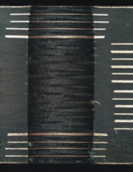
Fabricators can further enhance the reliability of high-density interconnects by optimizing the direct metallization and via fill processes. Recent studies1 demonstrate that optimizing these technologies minimizes etching, reduces copper budget, and increases line and space capability in complex designs.
Initially, standard conformal plating baths were used for via plating. Advanced via fill baths now preferentially plate into a variety of via sizes. Next-generation direct metallization technologies, such as Shadow® Plus, followed by full via fill, enable fabricators to consistently exceed IPC reliability specifications compared to electroless copper and conformal fill processes. For example, combining Shadow Plus and MacuSpec™ VF-TH 500 exhibits excellent physical (passing IPC Class III) and thermal reliability properties in solder dip, IR reflow, and OM test above the targets for IPC-TM-650 2.6.8, 2.6.26, and 2.6.27 specifications.
Increased Yield and Efficiency
Direct metallization minimizes defects during coating, offering higher yields. Defects in the interfacial electroless copper layer can lead to separation failures, resulting in intermittent or open circuit failures during electrical testing.
Direct metallization requires fewer processing steps and has a faster throughput (than electroless copper), simplifying quality control and increasing yields. The direct metallization process is highly stable, allowing for easy start and stop production, is non-dynamic and has a longer bath life than standard electroless copper.
The latest direct metallization technologies further enhance efficiency by eliminating sludge build-up. This build-up is common in traditional tanks, leading to frequent maintenance. Shadow Plus next-generation direct metallization technology reduces this maintenance and downtime, increasing efficiency and process stability.
Compatibility and Design Considerations
Direct metallization is suitable for rigid and flex materials. It can work with small feature sizes, including microvias with an aspect ratio approaching 1.2:1 on thin substrates (~3 µm foil). It can also be applied to thicker boards with through holes with an aspect ratio up to 20:1 without modifications. The process is compatible with all material sets used in IC substrates and HDI PCBs for commercial products:
- Standard FR4 laminates.
- Polyimide (including adhesive less options).
- BT epoxy.
- Ajinomoto buildup film (ABF).
- Reinforced and unreinforced PTFE laminates.
- Resin-coated copper (RCC).
- Liquid crystal polymer (LCP).
The direct metallization process enables a lower etch factor, enabling the higher density line/width spacing values demanded in today’s high-density products.
Additional Benefits of Direct Metallization
Direct metallization supports a wide range of HDI applications, offering higher reliability and yield than electroless copper. From a business and sustainability perspective, direct metallization requires up to 90% less water consumption, no precious metals, eliminates harmful chemicals like formaldehyde, and uses less energy. These factors enable fabricators to:
- Meet EH&S requirements.
- Reduce carbon footprint.
- Provide consistent quality.
- Potentially lower fabrication costs.

Conclusion
As electronic devices shrink, PCB designs must accommodate smaller features, thinner layers, and denser components. Microvias are crucial for routing interconnects in compact configurations, but traditional processes face reliability issues at smaller sizes.
Direct metallization offers a reliable alternative to electroless copper plating, addressing these challenges. It reduces the need for interfacial layers that can cause failures, enhancing connectivity and improving mechanical reliability and yield. Its compatibility with various substrates makes it an ideal solution for standard and HDI fabrication. Additionally, its lower water, energy, and chemical consumption lowers fabrication costs, making it an attractive choice for PCB manufacturing and a sustainability win for users.
Through reliability and efficiency enhancements, direct metallization ensures high performance for today’s complex electronic devices.
For more information on direct metallization for HDI PCBs and IC substrates, please contact us here.
1 Gugliotti, C, (2024). ‘Advanced Viafill Reliability Using Direct Metallization Technology’. IMPACT Conference. Taipei, Taiwan, 23-25 October.
Have media inquiries?
Connect with Us
For all media inquires, please contact Joanna Locke, Public Relations Manager
Email us